
Mumbai. 16 September 2026
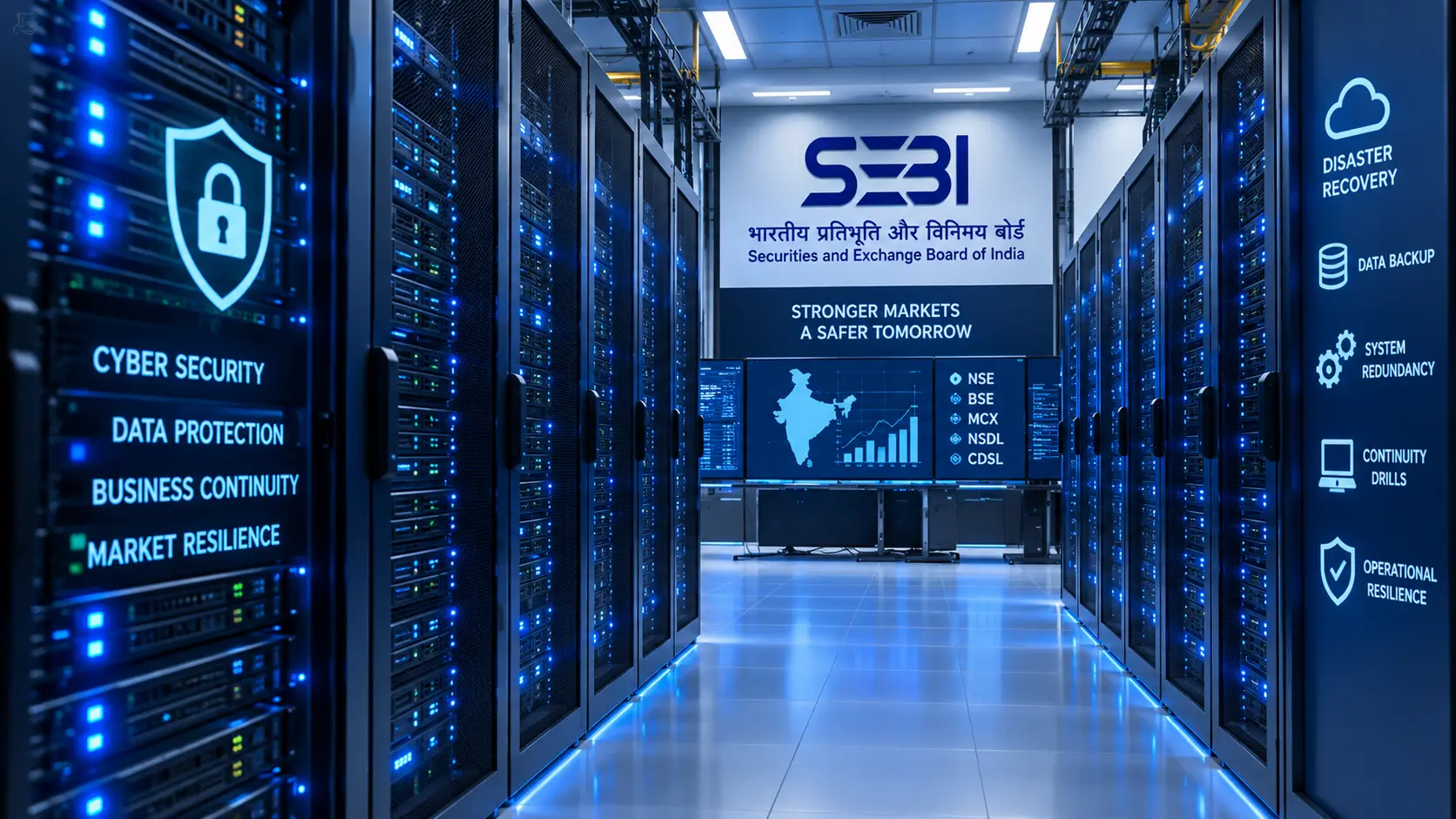
The Securities and Exchange Board of India (SEBI) has introduced a comprehensive consultation paper proposing stricter Business Continuity Plan (BCP) and Disaster Recovery (DR) requirements for Market Infrastructure Institutions (MIIs)—including stock exchanges, clearing corporations, and depositories. As financial markets rely increasingly on real-time technological infrastructure, SEBI’s updated framework seeks to fortify the Indian financial ecosystem against tech outages, hardware failures, data-centre disruptions, and sophisticated cyber threats.
Core Elements of SEBI’s Proposed Framework
To ensure that critical market functions can resume rapidly after an incident, the regulator focuses on structural resilience over simple regulatory compliance.
1. Targeted, Non-Working Day DR Drills
-
Shorter Duration: Mandatory mock DR drills will shift from full trading days to intensive sessions lasting at least 4 hours (inclusive of system switchover times).
-
Weekend Testing: Drills will be scheduled on non-working days to eliminate operational disruption for market participants, particularly in extended-hour trading segments like commodity derivatives.
-
Realistic Load Simulation: Even within shorter windows, institutions must simulate real-time order processing rates, live transaction volumes, and diverse operational scenarios.
2. Primary Site Operational Resilience
-
Comprehensive Stress Testing: Institutions must stress-test non-transactional database limits and system master records alongside standard order-per-second metrics.
-
Automated Fault Tolerance: Automated switchover checks are required to verify that secondary systems (servers, network paths, routers) immediately assume operations if primary components fail.
-
Configuration Drift Elimination: Hardware and software setups must remain synchronized across Primary Data Centres (PDC), Near Sites (NS), and Disaster Recovery Sites (DRS).
3. Fail-Safe Data Recovery Systems
-
Cross-Entity Data Recovery: If an exchange suffers severe data replication loss at its DRS, standard procedures will allow it to reconstruct lost trade data directly from Clearing Corporations (CCs).
-
Rapid Troubleshooting: Standardized error-logging and technology “ready reckoners” will help IT teams diagnose root causes during outages faster.
Why Disaster Recovery Matters for Retail Investors
For everyday market participants, regulatory disaster-recovery guidelines serve as an insurance policy for market integrity. While these measures cannot eliminate every potential technical failure, they ensure that unexpected disruptions do not lead to multi-day lockouts, lost execution records, or compromised clearing operations.
Frequently Asked Questions (FAQ)
Q1: What are Market Infrastructure Institutions (MIIs)?
MIIs refer to key organizations that form the structural backbone of securities markets, including stock exchanges (e.g., NSE, BSE), clearing corporations (e.g., NCL, ICCL), and depositories (e.g., NSDL, CDSL).
Q2: Will these proposed changes disrupt regular trading hours?
No. By shifting disaster-recovery drills to non-working days, SEBI ensures that system switchover tests do not affect live market trading hours.
Q3: How can stock exchanges recover trade data if their backup sites fail?
Under SEBI’s proposal, stock exchanges will be equipped to retrieve and rebuild transaction records using mirrored data maintained by Clearing Corporations.
Relevant Resources
-
Stay updated on Indian financial regulation news on Matribhumi Samachar English.
Disclaimer: This article is strictly for informational and educational purposes based on SEBI’s public consultation documents. It does not constitute investment advice or formal legal advice.