
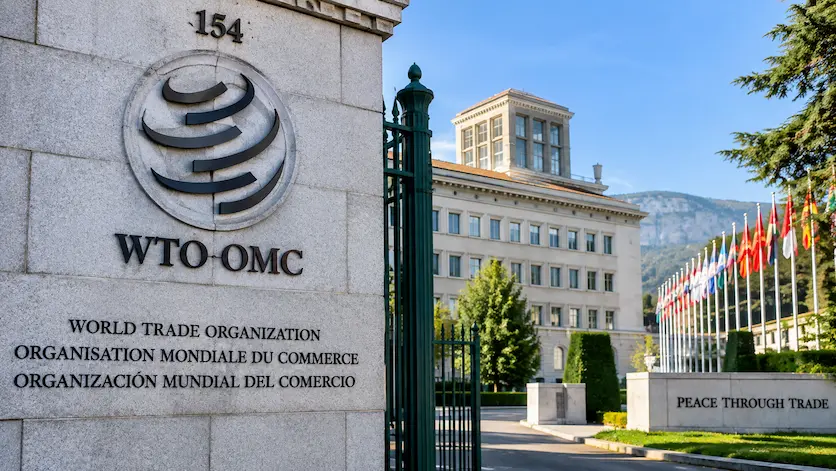
Geneva.
India has officially submitted a landmark proposal at the World Trade Organization (WTO) outlining eight guiding principles—or “guardrails”—for plurilateral trade initiatives. Circulated to members on September 16, 2026, the submission signals a calibrated shift in New Delhi’s strategy: moving from total resistance to conditional engagement with agreements negotiated by subsets of WTO members.
Understanding Plurilateral Trade Agreements
A plurilateral agreement involves a specific group of WTO member countries rather than the full multilateral membership. While plurilaterals allow interested nations to advance rules on specialized subjects like e-commerce or investment facilitation, India has long cautioned against their unchecked proliferation. Unregulated plurilaterals risk fragmenting global trade rules, marginalizing non-participating nations, and diverting critical WTO resources away from core development mandates.
Breakdown of India’s 8 WTO Guardrails
India’s proposal establishes comprehensive rules across the life cycle of plurilateral agreements—from initiation to potential amendment:
-
Preserve Consensus-Based Decision-Making: Reinforces consensus as the primary pillar of the WTO, giving every nation an equal voice regardless of economic power.
-
Preserve Multilateral Character: Ensures plurilateral deals complement rather than replace the multilateral system, avoiding fragmentation into competing rulebooks.
-
Protect Non-Participants: Guarantees that countries choosing not to join plurilateral deals retain all existing WTO rights and face no economic penalties.
-
Keep Development & S&DT Central: Demands that Special and Differential Treatment (S&DT) for developing and least-developed countries remains non-negotiable.
-
Ensure Transparency & Engagement: Calls for member-driven clarity, ensuring smaller delegations are not caught off guard by complex negotiations.
-
Protect Existing Mandates: Requires new initiatives to fit cleanly within existing WTO agreements without overriding ongoing multilateral mandates.
-
Respect Institutional Scope: Confines initiatives strictly to legitimate trade matters, preventing overlap with other international bodies.
-
Ensure Efficient Use of Resources: Prevents scarce WTO financial and administrative resources from being diverted away from technical assistance programs.
Why India Changed Its Strategic Approach
For years, India strictly defended full multilateralism, opposing agreements like the Investment Facilitation for Development (IFD) pact. However, at the 14th WTO Ministerial Conference (MC14) in Cameroon earlier in 2026, India shifted to a stance of pragmatic governance.
By laying down explicit guardrails, India ensures that if plurilateral deals proceed, they operate under strict rules that protect Global South interests.
India’s Guardrails at a Glance
| Guardrail Focus | Core Objective | Impact on Global Trade |
| Consensus | Protect consensus decision-making | Prevents powerful economic blocs from overriding smaller nations. |
| Multilateralism | Complement, not replace, global rules | Stops fragmentation of global trade regulations. |
| Non-Participants | Preserve rights of non-members | Ensures opt-outs carry no loss of existing WTO benefits. |
| Development | S&DT and development priority | Prevents commercial agendas from displacing poverty and growth mandates. |
| Transparency | Open, member-driven processes | Helps resource-constrained delegations participate effectively. |
| Existing Mandates | Align with current WTO work | Avoids duplication of authorized multilateral negotiating agendas. |
| Scope | Stay within WTO competence | Keeps trade talks focused on trade, not non-trade overlaps. |
| Resources | Protect WTO budget & Secretariat | Safeguards funds for technical aid and capacity-building programs. |
Related Coverage on Matribhumi Samachar
For further insights into India’s trade policy and legal actions at Geneva, explore relevant updates on Matribhumi Samachar:
Frequently Asked Questions (FAQ)
Q1: Did India endorse plurilateral trade agreements at the WTO in 2026?
No. India issued a conditional proposal setting eight mandatory guardrails. India accepts plurilaterals only if they respect consensus, multilateral principles, and developing-nation protections.
Q2: What is the main difference between multilateral and plurilateral WTO agreements?
Multilateral agreements bind all WTO member states by universal consensus. Plurilateral agreements involve only a subset of willing members.
Q3: How do India’s guardrails help developing and least-developed countries?
They preserve Special and Differential Treatment (S&DT), prevent the diversion of WTO technical aid budgets, and ensure non-joining countries face no discrimination.
Disclaimer
This article is for informational purposes only and does not constitute formal legal or diplomatic advice. Readers are advised to consult official WTO documentation and Ministry of Commerce updates for legal policy reference.