

Mumbai. 16 September 2026
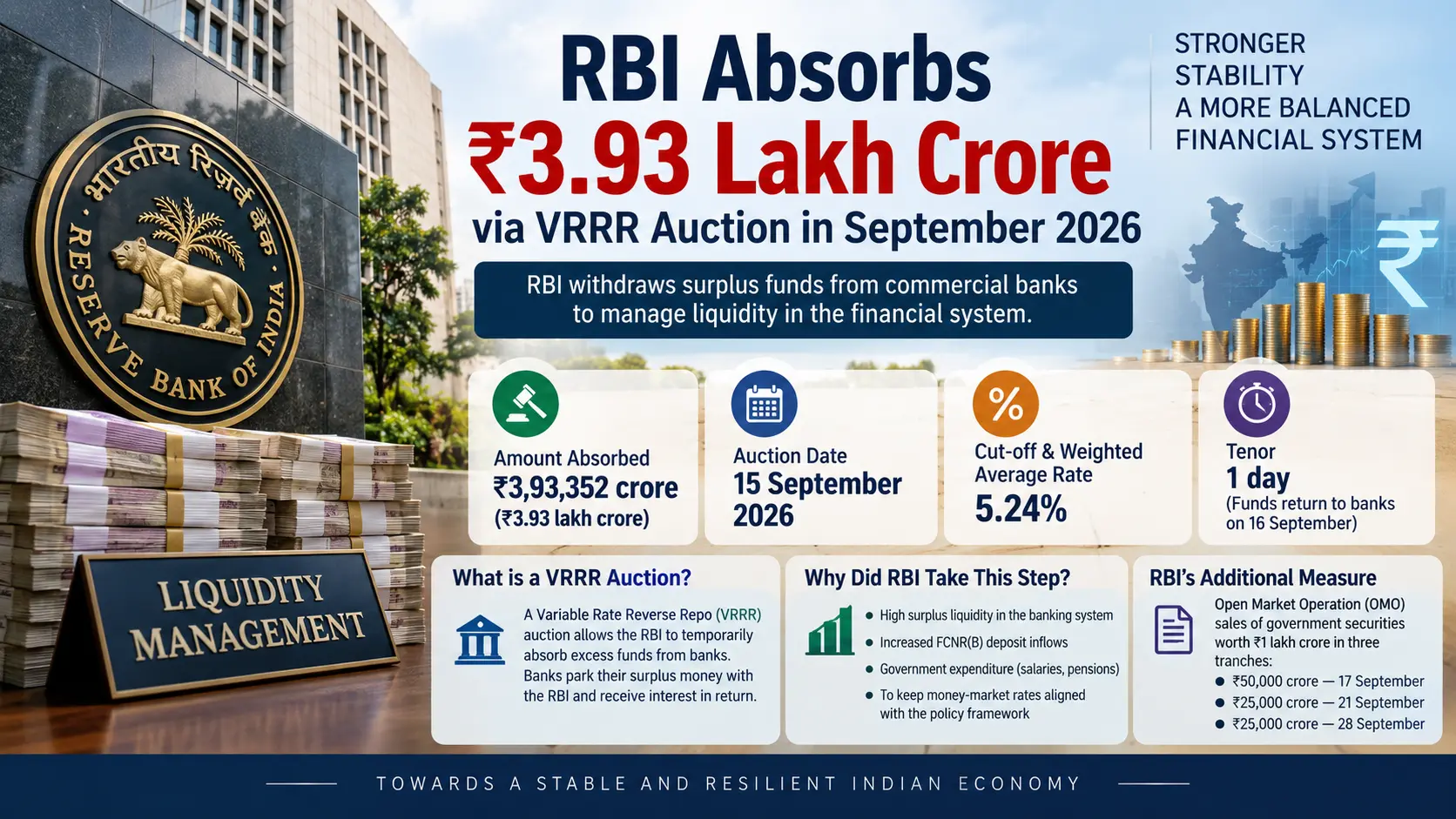
In a significant monetary management move, the Reserve Bank of India (RBI) absorbed ₹3.93 lakh crore from the banking system on September 15, 2026, using its Variable Rate Reverse Repo (VRRR) framework. The operation highlights an extraordinary buildup of cash reserves in Indian commercial banks, driven by robust foreign currency conversions and scheduled fiscal spending.
The central bank accepted bids totaling ₹3,93,352 crore out of a notified amount of ₹5 lakh crore at a cut-off and weighted average yield of 5.24%. The one-day tenor operation sees the funds returning to the banking system on September 16.
Understanding the VRRR Framework
A Variable Rate Reverse Repo (VRRR) auction is a liquidity-absorption instrument used by the central bank to temporarily pull excess liquidity out of commercial banks.
-
The Mechanism: Commercial banks park surplus cash reserves with the RBI for a specified duration (ranging from overnight to 14 days) and earn interest in return.
-
The Strategic Goal: By temporarily locking up surplus cash, the RBI prevents short-term money-market rates from falling significantly below the official policy rate.
What Triggered the Massive Cash Surplus?
Estimates showed the banking system liquidity surplus rising near ₹10.73 lakh crore on September 11. Two major factors caused this massive buildup:
-
FCNR(B) Deposit Mobilization: Banks witnessed high foreign currency non-resident deposit inflows. Converting these foreign assets into Indian Rupees via RBI operations introduced fresh liquidity directly into bank balances.
-
Month-End Government Outlays: Regular government disbursements—including civil service salaries and pension payouts—released substantial liquidity into commercial bank accounts.
Why RBI Acts Against Excess Liquidity
When commercial banks hold far more funds than market demand requires, interbank call money rates and short-term debt instruments experience severe downward pressure.
Unchecked surplus cash threatens monetary policy transmission—making official rate guidance less effective across commercial lending channels. Managing excess liquidity keeps call rates aligned with the RBI’s target policy corridor.
+-----------------------------------------------------------------------+
|                 RBI LIQUIDITY MANAGEMENT DUAL-TOOL STRATEGY           |
+-----------------------------------------------------------------------+
| 1. Short-Term Adjustment (VRRR Auction)                                |
|    • Absorbed ₹3.93 Lakh Crore (1-Day Tenor on Sept 15, 2026)         |
|    • Prevents overnight money-market rates from collapsing.            |
+-----------------------------------------------------------------------+
| 2. Long-Term Adjustment (OMO Government Bond Sales)                  |
|    • Selling ₹1.00 Lakh Crore G-Secs in 3 tranches (Sept 17, 21, 28) |
|    • Withdraws durable, long-term structural liquidity.               |
+-----------------------------------------------------------------------+
What This Means for Market Stakeholders
-
For Borrowers & Homeowners: VRRR auctions do not alter primary policy interest rates. Borrowers will not face immediate changes to loan interest rates or EMIs based purely on this short-term cash absorption.
-
For Depositors: With money supply remaining high, banks face less urgency to compete aggressively for deposits by raising interest rates.
-
For Financial Markets: Absorbing surplus cash stabilizes overnight interbank borrowing costs and reinforces the RBI’s monetary control across fixed-income markets.
Frequently Asked Questions (FAQs)
Q1: What is the main difference between VRRR and Open Market Operations (OMO)?
VRRR operations are short-term liquidity-adjustment measures (often lasting 1 to 14 days) designed to manage daily money-market fluctuations. OMO sales involve selling government securities to permanently drain long-term liquidity from the financial system.
Q2: Does the ₹3.93 lakh crore VRRR absorption mean loan EMIs will go up?
No. VRRR operations manage short-term interbank cash flows and do not represent a policy rate hike. Retail loan interest rates depend on broader monetary policy stances, bank cost of funds, and economic conditions.
Q3: Why didn’t banks submit the full ₹5 lakh crore notified by the RBI?
Banks retain a portion of their surplus cash to meet daily operational needs, satisfy mandatory reserve ratios, and fulfill anticipated short-term credit demand rather than locking 100% of excess funds with the central bank.
Related Links & Coverage
-
For continuous updates on central banking and economic policy, visit the Matribhumi Samachar English Home.
-
Read about currency management strategies: How RBI is Shielding the Indian Rupee from Global Economic Shocks.
-
Explore central bank regulatory updates: RBI’s Loan Recovery Crackdown: Guide to New Borrower Rules.
Disclaimer: The content provided in this article is for educational and informational purposes only and does not constitute formal financial advice or investment recommendations. For specific financial or credit decisions, consult a qualified advisor or refer to official releases from the Reserve Bank of India.