

Jammu.
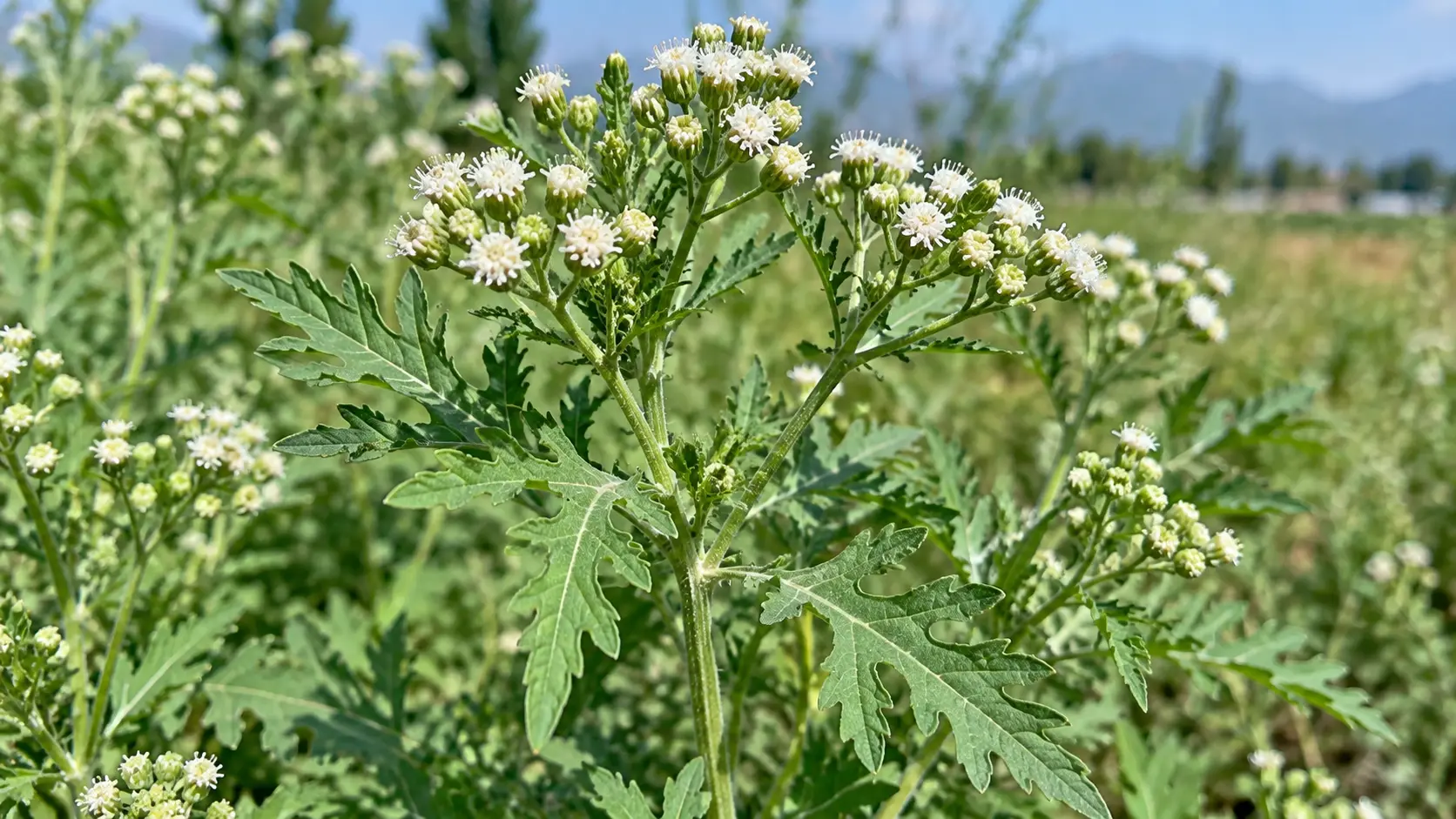
Scientists from the Sher-e-Kashmir University of Agricultural Sciences and Technology of Kashmir (SKUAST-K)—including agronomists Prof. Purshotam Singh, Prof. Amal Saxena, and Director Extension Prof. Raihana Habib Kanth—have detected the highly invasive weed Parthenium hysterophorus in an agricultural field in Srinagar.
Described as an early-warning signal, this detection highlights the urgent need for timely identification and field-level vigilance to prevent the aggressive weed from establishing a permanent foothold across Kashmir’s temperate agricultural ecosystems.
What Is Parthenium Hysterophorus?
Parthenium hysterophorus, commonly known as parthenium weed or congress grass, is a highly aggressive annual plant belonging to the Asteraceae family.
-
Rapid Growth & Seed Production: A single mature plant can produce thousands of lightweight seeds that disperse easily across wide geographic regions.
-
Allelopathic Effects: The plant synthesizes and releases biochemical compounds into the surrounding soil. These compounds actively inhibit the germination and growth of neighboring crops and native flora, severely threatening local biodiversity and agricultural yields.
Why the Srinagar Detection Is Significant
Recent scientific assessments confirm that Parthenium hysterophorus has successfully adapted to complete its full reproductive life cycle within Kashmir’s temperate climate:
-
Winter Survival: Seeds overwinter safely inside the soil profile during severe cold months.
-
Early Germination: Germination occurs between late March and early May as soil temperatures rise.
-
Seed Maturation: Plants mature and produce viable seeds before the onset of autumn frosts.
-
Climate Change Risk: Gradual seasonal warming could accelerate growth cycles and create increasingly favorable conditions for widespread invasion.
Primary Vectors of Dispersal
Parthenium seeds spread rapidly across both cultivated farmlands and disturbed natural habitats through several key pathways:
| Dispersal Vector | Mechanism of Spread |
| Agricultural Machinery | Unwashed equipment moving between non-infested and clean fields. |
| Soil & Seed Supplies | Contaminated topsoil, compost, or uncertified crop seed lots. |
| Flowing Water | Irrigation channels, runoff, and natural streams carrying seeds. |
| Vehicles & Livestock | Seeds clinging to vehicle tires, animal hides, or contaminated feed/fodder. |
SKUAST-K Recommended Action Plan
To counter the establishment of Parthenium, SKUAST-K advises farmers to adopt an Integrated Weed Management (IWM) approach:
-
Regular Field Surveillance: Frequently inspect cropped fields, boundaries, ditch banks, and disturbed land.
-
Early Identification: Identify suspicious rosettes early before the plant flowers and sets seed.
-
Mechanical Removal: Manually uproot plants before flower formation, using proper protective gear to prevent skin irritation or allergies.
-
Targeted Eradication: Treat confirmed patches using approved cultural or targeted control measures to eliminate isolated populations.
-
Long-Term Soil Monitoring: Continue monitoring cleared sites across subsequent growing seasons, as soil seed banks can persist over time.
Frequently Asked Questions (FAQ)
Q1: Is Parthenium weed dangerous to human health?
Yes. Contact with Parthenium hysterophorus can trigger allergic reactions in humans, including severe contact dermatitis, skin rashes, respiratory allergies, and asthma.
Q2: Can Parthenium harm livestock?
Ingestion of Parthenium by cattle, sheep, or goats can cause mouth ulcers, dermatitis, and digestive issues. It also taints milk quality, imparting a bitter taste.
Q3: Does the Srinagar detection mean Kashmir is facing an immediate widespread crop failure?
No. SKUAST-K emphasizes that the advisory is a proactive call for heightened vigilance and early prevention rather than a reason for panic.
Disclaimer
This article is for informational and educational purposes only. Agricultural practices, chemical treatments, and weed management strategies should be executed in consultation with local agricultural extension officers or experts from SKUAST-K.
Related External Links
-
For broader updates on regional agriculture, business news, and local advisory releases, visit Matribhumi Samachar English.